

A Complete Guide to Fire Extinguishers: Types and How to Use Them

Walk into any building in Pakistan and you will spot a red cylinder mounted on a wall. That is a fire extinguisher. It sits there quietly, waiting for the worst day of your life. The problem is most people never learn how to use it until it is too late. Fires do not wait for you to read a manual. They spread in seconds. In this guide you will learn every type of fire extinguisher, which one suits your space and the exact steps to use it correctly.
Hacsons has been supplying fire safety equipment in Pakistan for more than 40 years. They have helped homes, offices, warehouses and factories across Karachi, Lahore, Rawalpindi and Islamabad find the right protection. This guide pulls from that experience. It is written in simple language for anyone who wants to understand fire extinguishers without the technical headache.
What is a Fire Extinguisher
A fire extinguisher is a portable device that releases a fire-suppressing substance to put out small fires. It has a metal cylinder, a handle, a safety pin and a nozzle. When you pull the pin and press the handle, the substance shoots out under pressure. You point it at the base of the fire. The agent either cools the fuel, blocks oxygen or breaks the chemical chain that keeps the fire alive.
Fire needs three things to burn. Fuel, heat and oxygen. Remove any one and the fire dies. Every extinguisher is built around this simple principle. Some use water to cool the fuel. Some use powder to smother the flames. Some use gas to push oxygen away. The type you need depends on what is burning around you.
Key Parts You Should Know
The cylinder holds the agent under pressure. The handle and lever release it when squeezed. The safety pin stops accidental discharge. The pressure gauge tells you if the unit is ready. The hose or nozzle directs the flow. The label shows the type, size and fire class rating. Knowing these parts helps you check your unit quickly during an emergency.
Fire Extinguisher Types
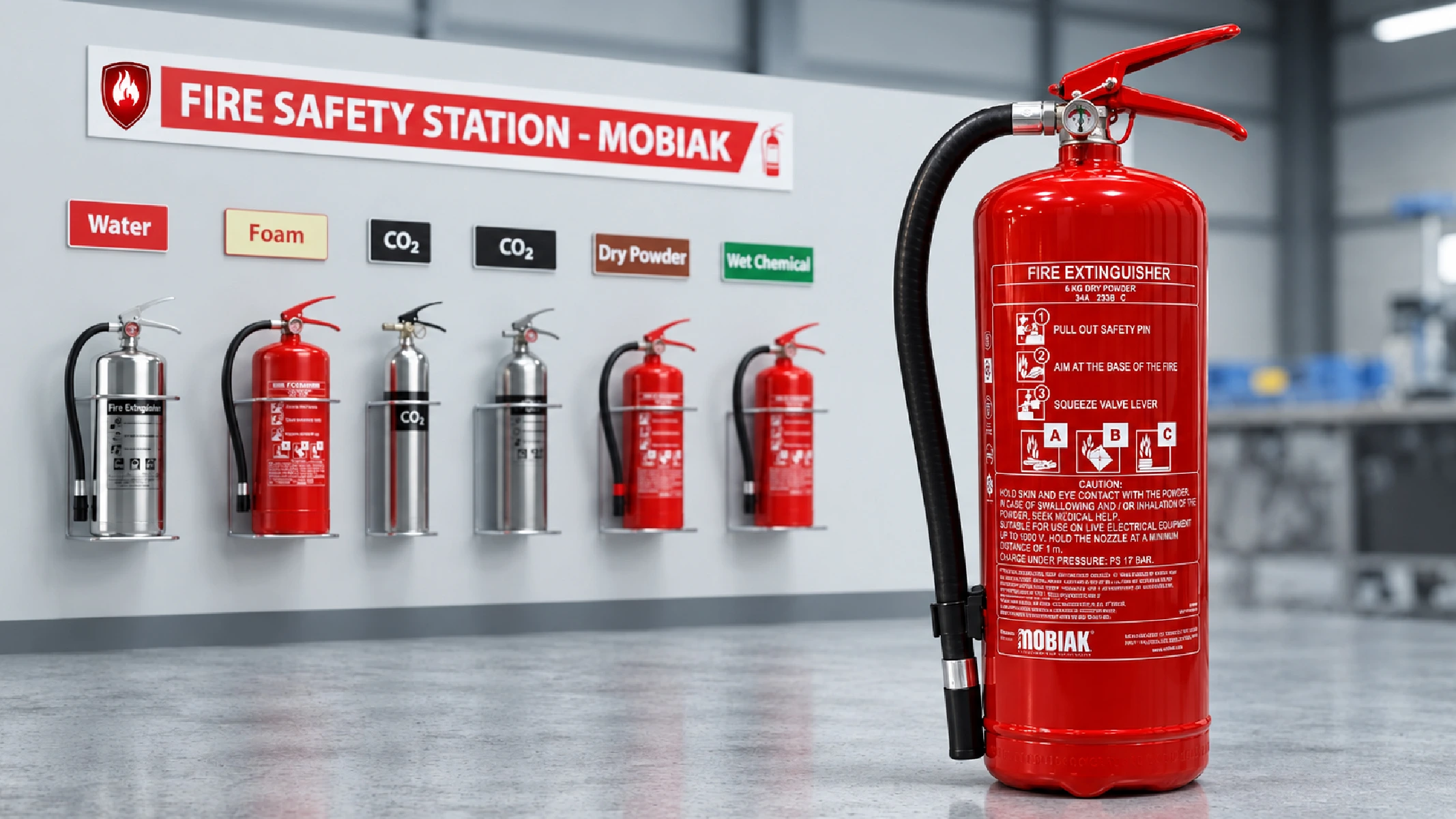
There are nine common types of fire extinguishers used across Pakistan. Each one targets specific fire classes. Using the wrong type can make a fire worse so always match the extinguisher to the risk. You can view the full certified range at fire extinguishers collection on Hacsons.
Water
The oldest and simplest type. Water absorbs heat and cools the fire until it cannot burn anymore. Water extinguishers work only on Class A fires like wood, paper and cloth. They are cheap and effective for offices and schools. Never use one on electrical fires or cooking oil fires.
Water Mist
Water mist uses fine droplets instead of a solid stream. The tiny particles absorb heat faster and cause far less water damage. These units are useful in places with sensitive equipment. Some models are safe for electrical fires up to a limited voltage. Always check the label before using one near live wires.
Water Spray
Water spray sits between water and water mist. It releases a spray that covers more surface area than a stream. This reduces splashing and improves cooling. Water spray units handle Class A fires well. They are common in warehouses and storage facilities where large amounts of paper or fabric are kept.
Foam
Foam extinguishers create a blanket that seals the fire surface. The foam blocks oxygen and stops vapours from escaping. These units work on Class A and B fires. They are the go-to choice for fuel storage areas, petrol stations and paint shops. Foam should never be used on electrical fires.
Dry Powder Standard DCP/ABC
Standard dry powder is the most common extinguisher in Pakistan. It contains a multi-purpose chemical that covers Class A, B and C fires. The powder smothers flames and interrupts the chemical reaction. It works fast and costs less than most alternatives. The downside is the mess. Powder gets into everything and can damage electronics if not cleaned quickly.
Dry Powder Specialist
Specialist dry powder is formulated for specific risks. Some versions handle Class D metal fires involving magnesium, sodium or aluminium. Others are designed for unique industrial chemicals. These units are rare in homes but essential in factories and metalworks. Never substitute a standard dry powder unit for a specialist one when metals are involved.
Carbon Dioxide (CO2)
CO2 extinguishers release carbon dioxide gas under high pressure. The gas pushes oxygen away from the fire and cools the surrounding area. These units leave zero residue. That makes them perfect for server rooms, laboratories, data centres and anywhere expensive electronics are kept. CO2 units cost more than dry powder but save you hours of cleanup.
Wet Chemical K-type
Wet chemical extinguishers are built for kitchen fires. They target Class F fires involving cooking oils and fats. When sprayed the chemical reacts with the hot oil and forms a soapy layer that seals the surface. This stops the fire from reigniting. Every commercial kitchen in Pakistan should have one within reach of the stove.
DCP
DCP stands for Dry Chemical Powder. In Pakistan this term is used for the standard multi-purpose dry powder unit. DCP covers Class A, B and C fires. It is the most popular choice for homes, shops, offices and vehicles. Hacsons stocks DCP units from trusted names like Fire Killer and Mobiak for every budget.
Fire Extinguisher Classes (A, B, C, D, F)
Fires are grouped by the material that is burning. This grouping is called a fire class. It tells you which extinguisher will work and which will fail. Here is the full breakdown.
| Class | Material | Best Extinguisher |
| A | Wood, paper, cloth and plastics | Water, foam, DCP |
| B | Petrol, diesel, paint and solvents | Foam, CO2, DCP |
| C | Electrical equipment and wiring | CO2, DCP |
| D | Magnesium, sodium and metal powders | Specialist dry powder |
| F | Cooking oils and fats | Wet chemical |
Most portable extinguishers sold in Pakistan cover Class A, B and C. That covers the majority of everyday risks in homes and shops. Kitchen oil fires need a wet chemical unit. Metal fires need a Class D specialist powder. If you are unsure which class your building needs just check the label on the extinguisher. It lists every class the unit is rated for. Hacsons also offers guidance if you want help matching your risks to the right product.
How to Use a Fire Extinguisher (PASS Method)
Fire safety trainers teach a simple four-step method called PASS. It works for every portable extinguisher on the market.
Pull the safety pin to unlock the handle. Aim the nozzle at the base of the fire not at the flames. Squeeze the handle to release the agent. Sweep the nozzle side to side across the fire base until the flames go out.
Stand at a safe distance. Keep your back to an exit so you can escape if the fire grows. If the flames do not die within a few seconds stop and leave the building. Call emergency services. A fire extinguisher is designed for small fires only. Never try to fight a large or spreading fire by yourself.
Fire Extinguisher Uses
The right extinguisher depends on where you plan to keep it. Hacsons recommends the following based on four decades of customer feedback.
For Home
A 2kg DCP extinguisher handles most household risks. It covers kitchen flare-ups, electrical fires and small paper or wood fires. If your kitchen uses a deep fryer or wok a wet chemical unit is a smarter choice. Keep one near the kitchen and one near the main living area in larger houses.
For Shop
A 2kg to 6kg DCP unit suits most retail shops. Small shops can use a 2kg unit. Larger showrooms and stores should have a 6kg unit or multiple smaller ones. If you stock flammable liquids add a foam extinguisher to your setup.
For Car
A 1kg or 2kg DCP unit with a vehicle bracket is ideal for cars. These are compact and easy to store in the trunk. The Bavaria range is popular for vehicles because of its quick-action valve and secure mounting bracket. Always fix the extinguisher in place so it does not roll around while you drive.
Maintenance and Safety Tips
Buying an extinguisher is only half the job. Keeping it ready is the other half. Check the pressure gauge every month. The needle must stay in the green zone. Shake DCP units once a month so the powder does not settle into a solid block. Refill the unit after any use even if you only released a small amount. Book a professional inspection once a year. Store the extinguisher in an open accessible spot not behind boxes or under stairs. Teach your family or staff how to use it.
A well-kept extinguisher can last ten years or more. A neglected one may fail the moment you need it. Set a monthly reminder for checks and a yearly reminder for service.
Conclusion
A fire extinguisher is the first line of defence against a small fire. Knowing what is inside the cylinder and how to use it puts you in control during those critical first seconds. Dry powder covers most general risks. CO2 protects electronics. Foam handles flammable liquids. Wet chemical is built for kitchens. Water works on wood and paper only. Match the type to your fire risk. Check your unit every month. Refill after every use. Train the people around you. These habits save lives.
Frequently Asked Questions
Q1: How many types of fire cylinders are there?
There are nine common types used in Pakistan. Water, water mist, water spray, foam, dry powder standard, dry powder specialist, carbon dioxide, wet chemical and DCP. Each type is designed for specific fire classes. DCP and CO2 are the most widely used in homes and businesses.
Q2: Which is better, ABC or CO2 fire extinguisher?
It depends on the fire risk. ABC dry powder units cover Class A, B and C fires. They are multipurpose and affordable. CO2 extinguishers leave no residue and are best for electrical equipment and server rooms. For a home or shop an ABC unit is usually better. For a data centre or laboratory CO2 wins.
Q3: How long does a 1kg fire extinguisher last?
A 1kg DCP extinguisher discharges in about 6 to 8 seconds. That is enough for a very small fire. For better protection choose a 2kg unit which gives you 8 to 12 seconds. Always refill or replace the unit after any use regardless of how little was discharged.
Q4: What are Class E fires?
Class E is not part of the standard classification used in Pakistan and most of the world. It was used in some older systems for electrical fires. Today electrical fires fall under Class C. CO2 and DCP extinguishers are safe for these fires. Always confirm by reading the label on your unit.
Q5: Does Hacsons supply fire extinguishers for home and shop use?
Yes. Hacsons supplies certified fire extinguishers for homes, shops, offices and vehicles across Pakistan. They stock every major type including DCP, CO2, foam, water and wet chemical. Hacsons has over 40 years of experience and offers nationwide delivery with after-sales refill services in Karachi, Lahore, Rawalpindi and Islamabad.