Safety Harness Price in Pakistan: Types, Standards and Buying Guide 2026

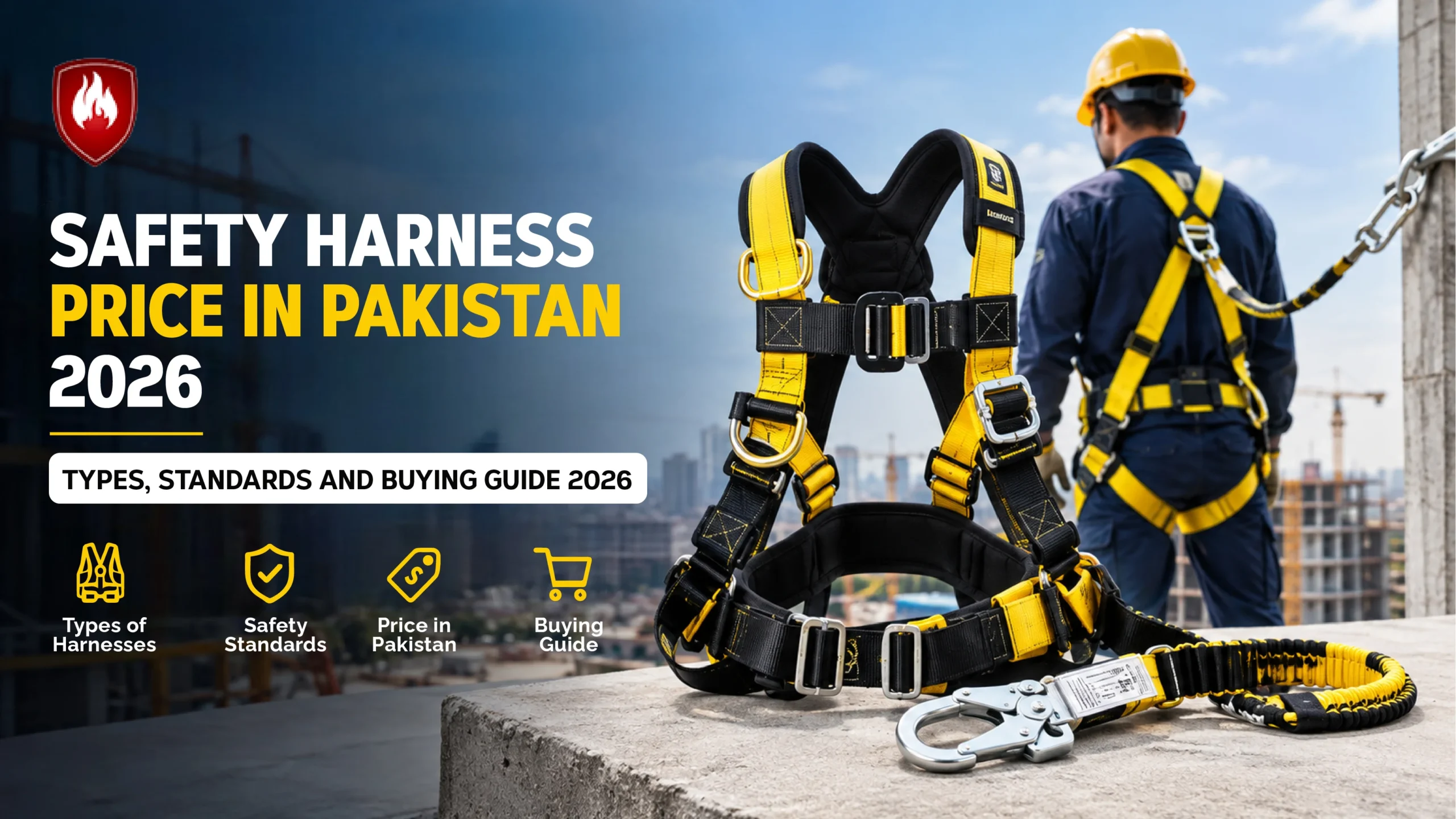
Safety harness price in Pakistan starts at Rs 2,800 for a basic work positioning harness and goes up to Rs 31,000 for a premium full body harness with double lanyard. That price gap tells you something important. Not every harness is built for every job. A warehouse worker on a scissor lift needs something different from a tower climber at 100 feet. This guide breaks down every type, every standard, and every price range. Hacsons has been supplying fall protection gear to Pakistani industries for over 40 years. They are an authorised distributor for global brands like 3M, Honeywell, MSA and Safety 53. Every harness they sell comes from official channels with full manufacturer warranty. They ship anywhere in Pakistan.
What Is Fall Protection?
Fall protection is the equipment and procedures that keep workers safe when they work at height. It covers two main ideas. Fall prevention stops a fall from happening. Fall arrest stops a fall after it starts. Guardrails, safety nets and barriers are fall prevention. They keep everyone away from the edge. Full body harnesses, lanyards and self-retracting lifelines are fall arrest. They catch you if you slip. Fall prevention is always better. But sometimes you cannot build a guardrail. That is when personal fall protection comes in.
Every personal fall protection system has four parts. The anchor point. The body wear (your harness). The connector (lanyard or SRL). And the deceleration device (shock absorber). Miss any one of these and the system fails. That is why choosing the right harness matters so much. It is not just about the price. It is about matching the gear to the hazard. For a complete overview of fall protection products available in Pakistan, you can explore the fall protection category on Hacsons.
Safety Harness Price in Pakistan 2026
Prices vary widely based on type, brand and features. Here is a simple breakdown for 2026 based on current Hacsons inventory and market rates.
Full Body Harness Price Range
A basic full body harness with a single dorsal D-ring starts at Rs 5,000. A mid-range harness with padded waist support and multiple D-rings costs Rs 11,500 to Rs 16,000. A premium harness with double lanyard, shock absorber and work positioning belt goes up to Rs 20,000 or more. The Miller Titan, for example, is a general-purpose harness for construction, manufacturing and oil and gas. It is priced around Rs 30,000.
Price by Type (3-point, 4-point, 5-point)
The number of adjustment points changes the price. A 3-point harness adjusts at the chest, waist and legs. It is the simplest design and costs the least. A 4-point harness adds a shoulder adjustment for better fit. A 5-point harness adds a chest strap and is the most secure. It also costs the most. For most industrial work in Pakistan, a 4-point or 5-point harness is recommended. The extra adjustment keeps the harness in place during a fall.
Price by Brand
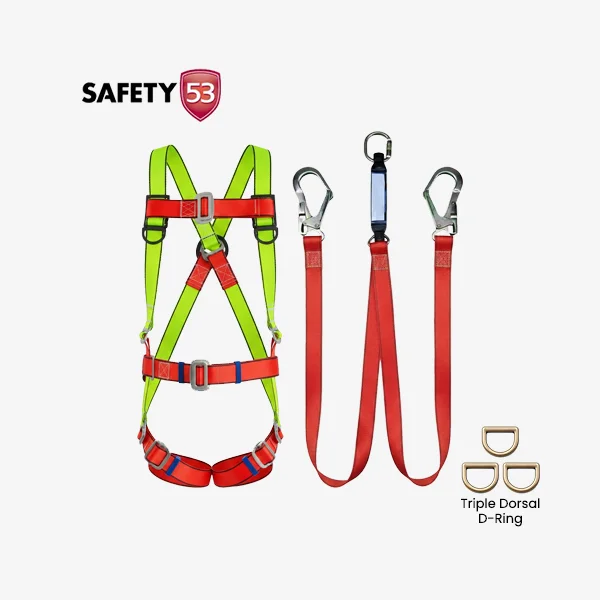
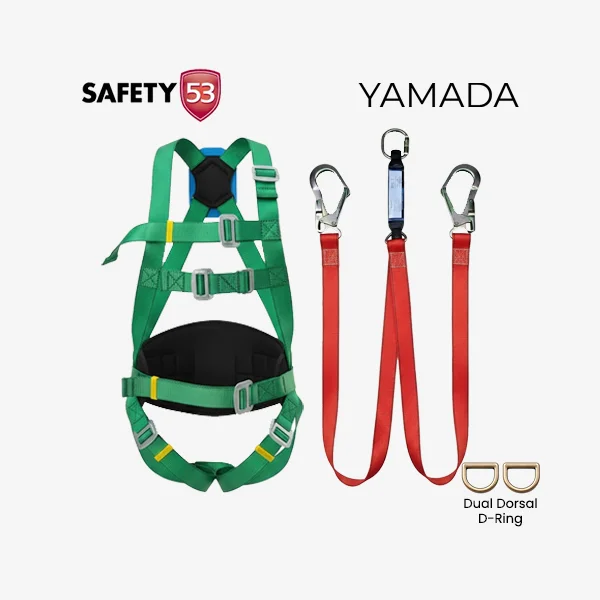
Brand reputation affects price. Hacsons stocks Safety 53, a trusted name in Pakistani fall protection. The Safety 53 HS-5229 full body harness with double lanyard costs Rs 14,500. The THUNDER full body harness is Rs 14,000. The MAXIPRO is Rs 11,500. For budget-conscious buyers, the Citex full body harness starts at Rs 5,000. Yamada offers a full body harness at Rs 6,000. For premium international brands, Miller Titan goes up to Rs 30,000. Every brand at Hacsons is certified and comes with warranty.
| Model | Price (PKR) | Best For |
|---|---|---|
| 3D Work Positioning Harness | Rs 2,800 | Basic work positioning |
| Citex Full Body Harness | Rs 5,000 | General fall arrest |
| Yamada Full Body Harness | Rs 6,000 | Light industrial use |
| MAXIPRO Full Body Harness | Rs 11,500 | Construction, scaffolding |
| THUNDER Full Body Harness | Rs 14,000 | Tower work, maintenance |
| ALTAS HS-5229 (Double Lanyard) | Rs 14,500 | Fall arrest and positioning |
| Miller Titan | Rs 30,000 | Oil and gas, heavy industry |
These prices are for reference. Prices change with certification updates and import costs. For a current quote, contact Hacsons directly. They also offer bulk pricing for construction companies and industrial clients.


Types of Safety Harnesses
Not all harnesses look the same. Each type is built for a specific job. Choosing the wrong one is dangerous. Here is what you need to know.
Full Body Harness
A full body harness is the standard for fall arrest. It has straps that go over the shoulders, around the chest, and under the legs. When you fall, the harness spreads the force across your body. That prevents injury to your spine and internal organs. A full body harness must have a dorsal D-ring at the back. That is where the lanyard connects. Some models also have chest and side D-rings for work positioning. The Safety 53 MAXIPRO and THUNDER are good examples. They are designed for construction, scaffolding and tower work. For lightweight options that work well with a full body harness, check what Safety 53 offers on Hacsons.
Work Positioning Belt
A work positioning belt is not a fall arrest device. It is a support tool. It lets you lean back and work with both hands free. Linemen, welders and window cleaners use these belts. They have side D-rings for a positioning lanyard. But they do not have a dorsal D-ring for fall arrest. Never use a work positioning belt as your only fall protection. You need a full body harness for that. Hacsons carries work positioning harnesses that combine both features. The padded waist support reduces fatigue during long shifts.
Rescue Harness
A rescue harness is designed to lift or lower a person. It has attachment points on the shoulders or chest. That lets a rescuer pull the worker up in an upright position. Rescue harnesses are used in confined space entry, tower rescue and emergency response. They are not for general fall arrest. If you work in a team that might need to rescue someone, you need a rescue harness. The Yamada full body harness from Hacsons can be adapted for rescue use. It has a dorsal D-ring and adjustable straps. Explore more options from the Rangers range on Hacsons.
Confined Space Harness
A confined space harness has a D-ring on each shoulder. That lets a rescue team pull you out through a narrow opening. If you wear a standard full body harness, you might come out face down. That is dangerous. A confined space harness keeps you upright during retrieval. It also has a front D-ring for fall arrest. Workers in tanks, silos, sewers and tunnels need this type. It is a specialised piece of gear. Do not try to use a regular harness for confined space entry.
Safety Harness Standards Explained
Standards are not just paperwork. They prove the harness has been tested to survive a real fall. Here is what the main standards mean.
EN 361 (Full Body Harness)
EN 361 is the European standard for full body harnesses. It sets requirements for design, testing and marking. A harness that meets EN 361 has been drop-tested with a 100kg dummy. The force on the body must stay below 6kN. That is the limit before internal injury occurs. The standard also checks that the harness does not slip off during a fall. Every full body harness sold by Hacsons meets EN 361.
EN 358 (Work Positioning)
EN 358 covers work positioning belts and harnesses. It tests the side D-rings and the waist belt. The belt must support the user’s weight without breaking. It also must not cause injury when you lean back. Linemen and arborists rely on this standard. A harness with EN 358 certification can be used for positioning work. But you still need EN 361 for fall arrest.
EN 813 (Sit Harness)
EN 813 is for sit harnesses used in rope access and climbing. These harnesses have a waist belt and leg loops. They are lighter than full body harnesses. They are not for fall arrest. They are for positioning and descent. If you work on ropes, you need an EN 813 harness. If you work at height and might fall, you need EN 361.
ANSI Z359.11
ANSI Z359.11 is the American standard for full body harnesses. It is similar to EN 361 but with some differences. ANSI Z359.11 covers users from 59kg to 140kg. That is a wider range than EN 361. It also requires more detailed marking and instructions. If you work for an American company or on a US-funded project in Pakistan, your harness may need ANSI Z359.11 certification. Hacsons stocks harnesses that meet both EN and ANSI standards.
How to Choose the Right Safety Harness
Picking the right harness is about matching the gear to the job. Here is a simple guide by industry.
For construction work: You need a full body harness with a dorsal D-ring. A 4-point or 5-point adjustment system gives the best fit. Look for a padded waist belt for comfort. The Safety 53 THUNDER or MAXIPRO are good picks. They are built for scaffolding, steelwork and roof work. If you need a reliable budget option, the Protecto brand offers solid construction at a fair price.
For oil and gas: You need a heavy-duty harness with spark resistance. The Miller Titan is a top choice. It is designed for refinery and manufacturing environments. The harness must have a dorsal D-ring for fall arrest and side D-rings for positioning. You also need a shock-absorbing lanyard. Do not use a basic harness in this environment. The risks are too high.
For telecom and wind energy: You need a harness that allows climbing and positioning. A full body harness with a front D-ring and side D-rings works well. A double lanyard lets you stay connected while moving between anchor points. The Safety 53 ALTAS HS-5229 comes with a double lanyard. It is a strong choice for tower work. For related footwear that works well on ladders and towers, see what Safety Joggers offers on Hacsons.
Inspection and Maintenance Guide
A harness is only as good as its condition. A damaged harness can fail when you need it most. Here is how to keep yours ready.
Pre-Use Checks
Before every shift, run through this quick check. Look at the webbing. Are there cuts, frays or burns? Check the stitching. Any loose or pulled threads? Inspect the hardware. Buckles, D-rings and adjusters should have no cracks or corrosion. Make sure the labels are readable. If the date of manufacture has passed the service life, stop using it. A pre-use check takes two minutes. It can save your life.
Monthly Inspection
Once a month, do a deeper inspection. Take the harness off the job site. Lay it flat in good light. Check every strap from end to end. Look inside the padding. Check the shock absorber if your lanyard has one. If the shock pack has deployed, the lanyard is done. It must be replaced. Also check the load indicator. If it has activated, the harness has been in a fall. It must be removed from service.
Retirement Criteria
A harness must be retired if any of these are true. It has been in a fall. The webbing has chemical damage. The stitching is broken. The hardware is cracked or bent. The labels are missing or unreadable. The service life has expired. Most manufacturers recommend retiring a harness after 5 years, even if it looks fine. UV rays and moisture degrade the material over time. Do not gamble on an old harness. Replace it.
For related safety gear that works well with your harness, look at the Burly welding and industrial shoes on Hacsons. They are built for tough environments where fall protection is also needed.
Why Buy Safety Harnesses from Hacsons
Hacsons has been in the safety business for over 40 years. They are an authorised distributor for global brands like 3M, Honeywell, MSA and Safety 53. Every harness they sell comes from official channels. No grey market stock. No fakes. No refurbished gear sold as new. Every harness carries full manufacturer warranty.
Hacsons serves clients across Pakistan from offices in Karachi, Lahore, Islamabad and Rawalpindi. They supply fall protection gear to construction companies, oil and gas facilities, telecom operators, wind energy firms and government departments. The team helps you choose the right harness based on your job type, working height and risk level. Bulk pricing is available for corporate and industrial clients. After-sales support includes inspection, replacement and sizing help. For regular clients, they set up a running account with priority dispatch. That means your crew gets the harnesses they need without delays.
Conclusion
Safety harness price in Pakistan ranges from Rs 2,800 for a basic work positioning harness to Rs 31,000 for a premium full body harness with double lanyard. The right choice depends on your job. Construction workers need a full body harness with a dorsal D-ring. Oil and gas workers need a heavy-duty harness with spark resistance. Telecom and wind energy workers need a harness with front and side D-rings. Confined space workers need shoulder D-rings for upright rescue. Every harness must meet EN 361 or ANSI Z359.11. It must be inspected before every use and retired when damaged. Hacsons has been supplying certified fall protection gear to Pakistani industries for over 40 years. They are an authorised distributor. That means genuine products and full warranty. They offer nationwide delivery and bulk pricing. If you are setting up fall protection for your team, Hacsons can help you choose the right harness.
Frequently Asked Questions
In Pakistan, a basic safety belt starts at Rs 1,500 for a temporary lifeline belt. A full body safety harness with a single lanyard starts at Rs 5,000. A full body harness with double lanyard and shock absorber costs Rs 14,500 to Rs 20,000. Premium brands like Miller Titan go up to Rs 30,000. Hacsons offers competitive prices on all types with nationwide delivery.
For construction, you need a full body harness with a dorsal D-ring. A 4-point or 5-point adjustment system gives the best fit. Look for a padded waist belt for comfort. The Safety 53 THUNDER or MAXIPRO are good picks. They are built for scaffolding, steelwork and roof work. Hacsons stocks both models with nationwide delivery.
It depends on your work. A single lanyard works for fixed positions where you do not need to move between anchors. A double lanyard is better for climbing and moving. It lets you stay connected to one anchor while moving to the next. Never connect two lanyards together to make a longer one. The Safety 53 ALTAS HS-5229 comes with a double lanyard and is a good choice for tower work. Hacsons stocks both single and double lanyard options.
Inspect before every use. Check the webbing, stitching, hardware and labels. Look for cuts, frays, burns, cracks or corrosion. Do a deeper monthly inspection with the harness laid flat in good light. Replace the harness after any fall, or if you see damage. Most manufacturers recommend retiring a harness after 5 years, even if it looks fine. Hacsons offers inspection services across Karachi, Lahore, Islamabad and Rawalpindi.
Yes. Hacsons offers bulk and corporate pricing for construction companies, oil and gas firms, telecom operators and government departments. They also set up running accounts for regular clients with priority dispatch. For a quote, contact their sales team with your harness model and quantity. They will respond with pricing and delivery timelines. Bulk orders are delivered nationwide including Karachi, Lahore, Islamabad and Rawalpindi.